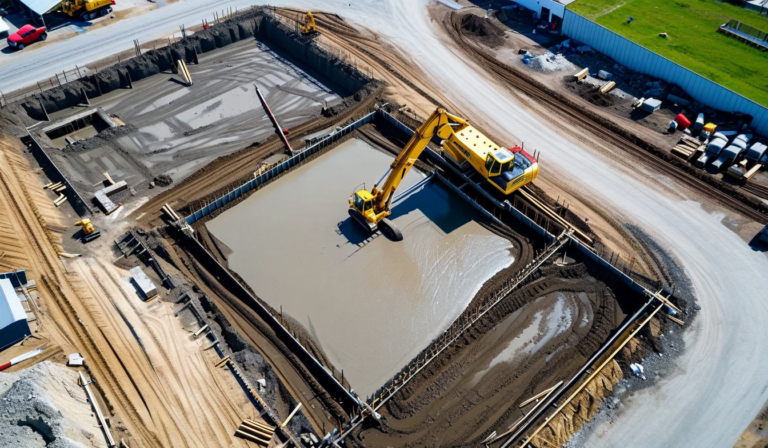
Concrete is the most widely used construction material on earth. It is also, in the residential construction context, the material where the gap between how it should be placed and how it often is placed creates the most significant long-term performance problems. Slab cracking, spalling, and premature failure are predominantly attributable not to bad mix design but to inconsistent consolidation, incorrect cover depth over reinforcement, and premature finishing before bleed water has evaporated. These are execution problems that autonomous pour management addresses directly.
The Consolidation Problem
Proper concrete consolidation requires vibrating the placed concrete thoroughly enough to eliminate air voids and ensure adequate contact between the concrete matrix and the reinforcement steel, while not over-vibrating to the point of segregating aggregate from paste. A skilled concrete finisher uses a pencil vibrator with practiced judgment about insertion depth, spacing, and duration. An inexperienced or fatigued finisher may over-insert, creating a "vibrator trail" that leaves a void, or under-vibrate, leaving honeycombing that creates a path for moisture and reduces structural capacity.
Consolidation failures are particularly insidious because they are typically invisible after the concrete sets. They only manifest when the structure is subjected to load or when moisture penetration causes reinforcement corrosion years later. Building code requires consolidation but provides inspectors limited ability to verify it in real time - they can observe whether vibration is occurring, but not whether it is occurring with adequate thoroughness.
Terran's approach to this problem uses vibrator probes mounted on a GPS-guided positioning arm that traverses the pour zone on a programmed grid pattern. The probe insertion depth, dwell time, and spacing follow a consolidation protocol derived from ACI 309 vibration requirements for the specific mix design and reinforcement configuration. The system logs every insertion location and duration, creating a consolidation map that documents compliance with the protocol across the entire pour area.
Pump Arm Positioning and Flow Control
Concrete placement with a pump involves positioning the pump hose to deposit concrete at specific locations, then moving the hose in a pattern that fills the pour zone in the correct sequence - typically beginning at the far end from the pump and moving back, avoiding placement that would require moving wet concrete across a large area. The sequencing matters because concrete placed and then moved before initial set disrupts the developing paste microstructure in ways that reduce final compressive strength.
Automated pump arm control positions the placement boom using GPS coordinates referenced to the pour zone layout in the project BIM model. The pump operator monitors flow rate and mix consistency from the truck; the arm positioning is handled autonomously based on the programmed pour sequence. This division of responsibility reduces the cognitive load on the pour crew, allowing the operator to focus entirely on the mix quality while the system manages placement geometry.
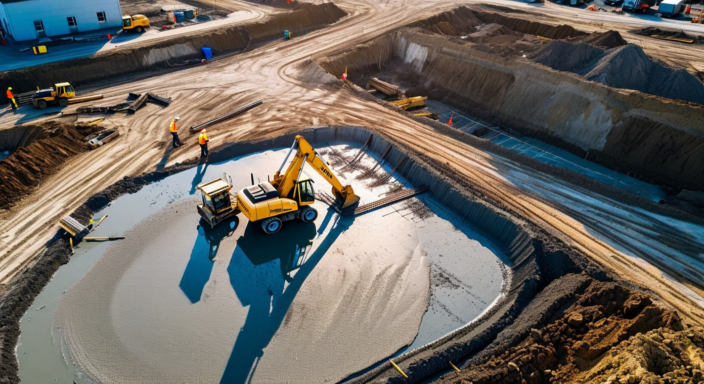
Flow rate control is adjusted automatically based on feedback from the volume-tracking system. The pour zone is divided into calculated fill volumes based on the design dimensions; the system compares cumulative placed volume against the calculated zone volumes and adjusts pump speed to maintain the designed placement rate. This prevents both underfill (which can leave low spots in slabs that pond water) and overfill (which wastes material and can cause over-stress on formwork systems).
Cover Depth Verification
Concrete cover over reinforcement - the distance between the outer face of the rebar and the concrete surface - is specified in design documents because it determines the degree of protection the concrete provides against corrosion of the steel. ACI 318 minimum cover requirements vary from 3/4 inch for slabs not exposed to weather to 2 inches for slabs exposed to deicers to 3 inches for slabs in direct contact with soil. Cover violations are among the most common construction defects found in forensic investigations of failed concrete structures.
Conventional construction relies on plastic rebar chairs and visual observation to maintain cover. The chairs work when properly spaced and when the reinforcement does not shift during placement and consolidation. They fail when chairs are spaced too widely, when they tip during vibration, or when the pour crew walks on the rebar during placement in ways that depress it below the design elevation.
The Terran pour management system includes a pre-pour cover verification scan using a structured light scanner that measures the as-set elevation of the top rebar layer relative to the form surface, computing the effective cover depth at each scan point. Areas where cover deviates more than 5mm from design elevation are flagged for correction before pouring begins. This pre-pour scan has identified cover deficiencies in 23% of the forms audited to date, all of which were corrected before concrete placement - deficiencies that would otherwise have been incorporated permanently into the structure.
Ambient Condition Monitoring and Pour Windows
Concrete's properties during placement and curing are sensitive to temperature, humidity, and wind speed in ways that significantly affect the outcome. At temperatures below 40 degrees Fahrenheit, cement hydration slows substantially, reducing early strength development. At temperatures above 90 degrees Fahrenheit, rapid surface drying can cause plastic shrinkage cracking before the concrete has sufficient strength to resist the tensile stress. High wind accelerates evaporation in ways that have the same effect as elevated temperature.
ACI 305 (hot weather concreting) and ACI 306 (cold weather concreting) provide guidance on pour conditions and required precautions. Following this guidance in practice requires someone on site to be actively monitoring ambient conditions, checking them against the pour-specific thresholds for the specific mix design and exposure class, and making the call to proceed, delay, or implement precautionary measures. This decision is often made under schedule pressure, which biases toward proceeding even when conditions are marginal.
The Terran pour management system integrates with a local weather station and queries forecast data for the planned pour window. Pour readiness is assessed automatically against the ACI guideline thresholds for the project's specified mix and exposure conditions. If conditions are marginal, the system presents the specific parameter values and the relevant ACI guidance to the supervisor for a documented proceed/hold decision. This documentation is valuable independently of the decision outcome - it establishes that the decision was made with accurate information and with reference to the applicable standard.
Curing Documentation
Initial curing of concrete - the first 7 days after placement - determines much of the long-term durability of the finished element. Adequate curing requires maintaining moisture and temperature in ranges that support continued cement hydration. ACI 308 curing requirements specify minimum curing duration based on cement type and ambient conditions. Verification that curing requirements were met is rarely documented in conventional construction - it depends on whether the superintendent remembers to check that curing blankets or cure compound was applied and maintained.
Post-pour monitoring in Terran deployments uses embedded temperature sensors placed in the concrete at the time of pouring and ambient weather station data to generate a curing compliance record. The system alerts the supervisor if slab temperature drops below the ACI 306 minimum during the curing period, allowing protective measures to be applied before damage occurs rather than after. The resulting cure log becomes part of the project's build record, providing documentation of curing compliance that satisfies most structural engineer and third-party inspection requirements. As covered in our article on structural quality assurance, this continuous documentation model is fundamentally different from the sampling-based approach that conventional inspection provides.
Discuss Your Concrete Requirements
Talk to our team about how autonomous pour management works for your slab types and project specifications.
Get In Touch