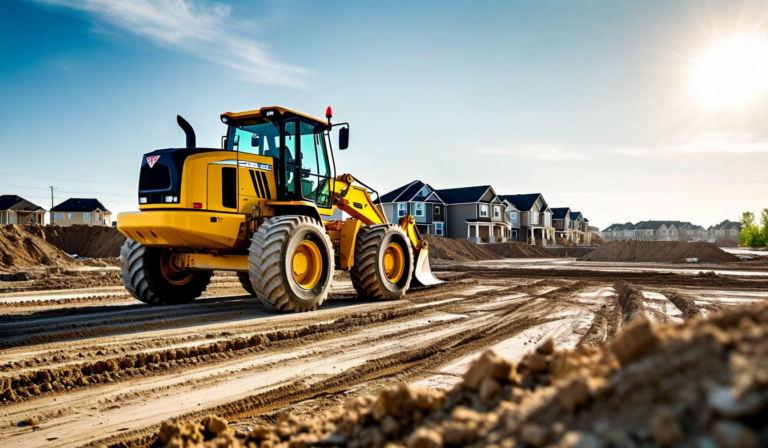
The United States is short approximately 3.8 million housing units according to the National Association of Realtors' most recent supply analysis. That shortfall has been building for more than a decade, driven by a combination of restrictive zoning, supply chain fragility, and a construction labor workforce that has been shrinking in relative terms since 2007. Autonomous robotics addresses exactly one of those three variables - but it addresses it in a way that can meaningfully shift the production math.
Why Labor Is the Binding Constraint
Zoning reform debates get the most political attention, and rightly so - you cannot build where building is prohibited. But even in markets where jurisdictions have up-zoned aggressively, production has not kept pace with the newly permissible density. Phoenix, for example, passed accessory dwelling unit liberalization in 2020 and saw permit applications surge. Completions, however, lagged by 14 to 18 months because general contractors could not staff the framing, masonry, and concrete crews to execute the backlog.
The Bureau of Labor Statistics estimates the construction industry needed approximately 650,000 net new workers in 2024 to meet demand. The actual net additions to the workforce were roughly 180,000. That gap does not close through wage increases alone - the median construction wage has risen 28% since 2019, yet open positions have increased rather than decreased. The demographic reality is that the average age of a skilled trades worker is now 43, retirement rates are accelerating, and apprenticeship pipeline enrollment has not compensated for attrition.
What Throughput Numbers Actually Mean
Autonomous framing robots do not replace experienced tradespeople in a one-for-one substitution model. What they do is change the throughput equation for the tasks that create the most scheduling bottlenecks. Framing a typical 2,000 square foot single-family home requires approximately 80 to 100 person-hours of skilled labor using conventional methods. A robotic framing system operating on a pre-loaded BIM schedule can complete the same structural shell in 18 to 22 machine-hours, requiring one human supervisor rather than a four- to six-person crew.
That is not a marginal efficiency gain. It is a structural change in how many homes a given labor pool can produce in a year. If a region has the capacity for 500 framing crew-days annually, the ceiling on completions under conventional methods is roughly 50 to 60 homes. With autonomous framing handling the structural work, that same regional labor pool can support 280 to 320 completions - supervising robots rather than swinging hammers.
Masonry as the Other Bottleneck
Framing is not the only rate-limiting step. In markets where masonry - brick, CMU block, stone veneer - is standard or code-required, the masonry crew often determines schedule more than any other trade. Skilled masons are among the most difficult construction workers to hire. The International Masonry Institute estimates that the U.S. workforce of union-trained masons has declined 31% since 2005, and non-union masonry labor has not filled the gap in markets with high aesthetic or structural standards.
Robotic masonry systems operate with a consistent mortar bed depth, course alignment within 1.5mm, and a deposition rate of 200 to 350 bricks per hour depending on pattern complexity. A two-person masonry crew with a robotic assist unit can produce what previously required five or six masons. More importantly, the robotic component does not fatigue across a 10-hour shift, does not call out on Mondays, and does not require union scale in markets where that matters to the pro forma.
The 94-Day Cycle and What It Unlocks
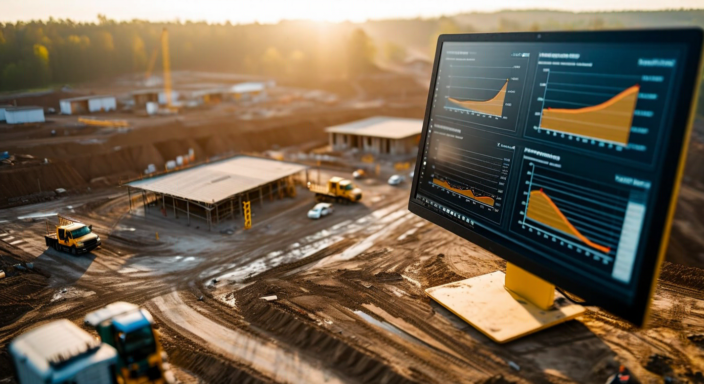
Terran's internal project data shows an average of 94 days from foundation pour to certificate of occupancy for a 2,000 square foot single-family home using our full platform. Industry average for comparable homes in comparable markets runs 140 to 180 days. That 46 to 86 day compression matters to the housing supply math in two ways.
First, it allows builders to complete more homes per year on the same land inventory. A builder with 40 lots who can complete them in 94 days rather than 160 days gets an additional completion cycle annually, effectively expanding their output by 30 to 40% without acquiring new land. Second, it reduces the carrying cost per unit. Construction financing typically runs at 7 to 9% annually on outstanding balances. Cutting 60 days of carry time saves $15,000 to $25,000 per unit on a typical $400,000 construction budget - cost savings that can be passed to buyers or absorbed as margin depending on market conditions.
Where Robotics Cannot Help (Yet)
Intellectual honesty requires acknowledging what autonomous construction cannot currently address. Permit processing times in many jurisdictions run 90 to 180 days, entirely independent of build speed. No robotic system makes the permitting queue shorter. Similarly, the infrastructure costs of new subdivisions - road improvements, utility extensions, drainage requirements - are political and financial constraints that technology does not touch.
Interior finish work - cabinetry installation, trim carpentry, tile setting, electrical device installation - remains predominantly manual. Robotics has made less progress in these tasks because the physical environments are more constrained and the work requires more contextual judgment than structural rough-in. The 94-day cycle assumes a finish carpentry crew working conventionally through the interior while the robotic systems handle the structural envelope.
The Supply Curve Argument
The economic case for robotic construction in a housing-shortage context is ultimately a supply curve argument. The housing shortage persists because the marginal cost of producing new units - factoring in land, labor, materials, and financing - has risen faster than median household income in most U.S. metros. If autonomous systems reduce the labor component of construction costs by 25 to 35%, they shift the supply curve outward, making it economically viable to build homes at price points that are currently unprofitable.
This is not a theoretical claim. Builders participating in early Terran deployments in the Phoenix and Tucson metros have reported per-unit cost reductions of 18 to 28% on framing and masonry line items. When labor represents 30 to 40% of total construction cost, a 25% reduction in that component translates to 7 to 10% reduction in total cost-to-build. In markets where affordability is constrained by the 5 to 8% gap between market rate and what workforce-income buyers can finance, that margin is precisely the difference between a viable project and a shelved one.
Scaling the Answer
One deployment demonstrating efficiency is a proof of concept. A hundred deployments across multiple markets, building seasons, and project types is a supply chain. Terran's production roadmap calls for 40 active robot kits deployed simultaneously by end of 2025, expanding to 120 by end of 2026. At full utilization, 120 kits operating at our observed cycle times could support completion of approximately 1,800 homes annually from Terran-managed deployments alone.
That is a fraction of the 3.8 million unit deficit. But it represents a viable scaling path that does not depend on training more craftspeople who do not exist, or on regulatory changes that face political resistance. It depends on manufacturing robots, which is a tractable engineering and capital problem. As we discussed in our analysis of housing production numbers, the path from 1,800 to 18,000 completions per year is a manufacturing scale question, not a workforce development question.
The housing crisis will not be solved by any single intervention. But an intervention that addresses the labor binding constraint without requiring that constraint to relax first is worth taking seriously.
See the Platform in Action
Talk to our team about what a Terran deployment looks like for your next project.
Request a Demo