Modular construction and robotic construction are regularly lumped together in conversations about construction industry innovation. Both offer alternatives to the fully manual site-built home. Both promise efficiency gains over traditional methods. But they operate on fundamentally different production models, have different cost structures, and are suited to different project types. Choosing between them is not a question of which technology is more advanced - it is a question of which production model fits your project constraints.
How Modular Construction Actually Works
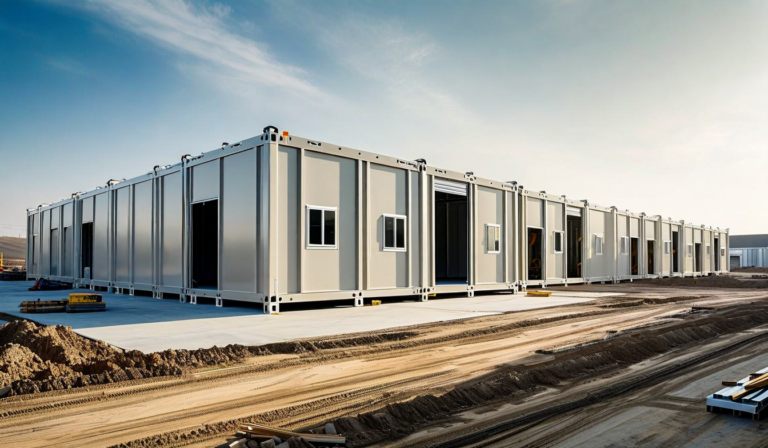
True modular construction - as distinct from panelized construction, which is a related but different approach - involves building complete volumetric modules in a controlled factory environment. These are three-dimensional boxes with walls, floors, ceilings, MEP rough-in, and often finish work already installed. Modules are trucked to site and set by crane onto a prepared foundation. The site work consists primarily of module-to-module connections, utility tie-ins, and exterior finish work.
The efficiency argument for modular construction is compelling in theory: factory environments allow work to proceed in parallel with site preparation, eliminate weather delays, reduce material waste through optimized factory production, and allow quality control that is easier to achieve in a fixed indoor environment than on a construction site. In practice, the efficiency gains are real but the capital requirements are significant. Factory construction requires a facility, specialized jigs, material handling equipment, and a permanent workforce - fixed costs that must be amortized across production volume. Modular factories require consistent order volume to operate efficiently, which creates a business model challenge in the inherently cyclical construction market.
The Transportation Problem in Modular
The physical constraint that limits modular construction most severely is transportation. Volumetric modules must be moved from factory to site by truck. Legal load dimensions in most states limit module widths to 14 to 16 feet and heights to 13.5 to 15.5 feet without special permits. Move widths up to 18 feet are possible with permits and escort vehicles, but at significant cost and logistical complexity.
This constraint shapes design. A modular building is, fundamentally, a collection of transportable-size boxes connected together. Architecturally, this works well for corridor-loaded apartment buildings and hotels, where unit modules stack efficiently. It works less well for single-family homes with open floor plans spanning 30+ feet, for buildings with complex geometry, or for sites that are inaccessible to wide-load trucks - infill urban sites, hillside properties, gated communities with narrow access roads.
Robotic site construction has no corresponding transportation constraint. The robots are the factory, deployed to site. A 50-foot open-plan great room is no more complex for a robotic framing system than four 12-foot corridor-style rooms, because the geometry constraint is the robot arm reach rather than a trucking dimension.

Cost Structure Comparison
Modular construction costs are typically quoted as a per-square-foot factory cost plus site costs. Published data from modular manufacturers suggests factory costs in the range of $80 to $130 per square foot for residential modules in current market conditions. Site costs - foundation, crane setting, module connections, finish work, utility tie-ins - typically add $40 to $80 per square foot. Total all-in cost runs $120 to $210 per square foot depending on specification level, market, and project scale.
Traditional site-built construction in the same markets runs $130 to $220 per square foot depending on labor availability and specification. The modular cost advantage, when it exists, is typically 5 to 15% rather than the 30 to 40% advantage that modular proponents often cite. The larger claimed savings require production volume and factory utilization rates that many modular operations do not sustain consistently.
Robotic site construction's cost advantage is concentrated in specific line items: framing labor, masonry labor, and schedule-related carrying costs. At current deployment scale, Terran's platform reduces those line items by 25 to 35%, which translates to 8 to 14% total project cost reduction depending on how labor-intensive the overall specification is. As deployment scale increases and robot manufacturing costs decline, that cost position will improve. The advantage is not uniformly distributed across a project budget the way modular can be, but it is also not contingent on a factory utilization rate.
Quality and Defect Profiles
Factory construction is generally assumed to produce higher quality than site construction. The evidence for this is mixed. Factory environments allow better climate control, eliminate rain-related damage to materials during construction, and permit more systematic inspection processes. However, modular buildings introduce a new defect category that site-built buildings do not have: transportation and setting damage. Modules that are structurally sound when they leave the factory can develop cracks, joint separations, and alignment issues from the stress of truck transport and crane setting.
A study by the National Institute of Building Sciences found that modular construction defect claims are concentrated in the connection zones between modules and in modules that experienced transportation stress. The interior of individual modules performs as expected; the interfaces between modules and between modules and the site-built components are where quality issues emerge most frequently.
Robotic site construction produces a continuous structural system without factory-to-site seams. The quality documentation system - continuous photographic records of every structural element placed - creates an inspection record that modular construction's factory environment cannot produce for the site assembly phase. The defect categories are different: dimensional placement errors and material inconsistencies rather than transportation damage. Both approaches represent quality improvements over undocumented manual site construction, but in different dimensions.
Speed: How the Schedules Compare
Modular construction's headline advantage is schedule compression through parallel processing. While site preparation proceeds, factory production continues. In theory, a modular building that takes 8 months site-built can be completed in 5 months modular because factory time overlaps with site time rather than following it. In practice, factory lead times - the queue of orders ahead of yours in production - frequently extend to 16 to 24 weeks, which eliminates the theoretical parallel processing advantage if lead time pushes factory production later than the completion of site preparation.
Robotic site construction does not offer parallel processing in the same sense - robots build sequentially on site after the foundation is complete. The schedule advantage comes from higher throughput in the linear construction process: less time per task rather than tasks running in parallel. Our 94-day site-to-CO average reflects this sequential but accelerated approach. Modular projects with factory lead time under 12 weeks and site access appropriate for crane operations can achieve comparable or faster schedules. Modular projects with longer lead times or constrained site access often do not.
Design Flexibility and Customization
Modular construction constrains design significantly - not because factory building is inherently inflexible, but because the transportation dimension limits and the connection zone engineering add cost to non-standard configurations. Modular builders typically offer a catalog of pre-engineered floor plans with limited customization options. Off-catalog designs require re-engineering the module-to-module connections, which adds cost and lead time that can exceed the savings of the modular approach for complex or bespoke designs.
Robotic construction follows the BIM model, whatever that model contains. A plan with unusual geometry, site-specific adaptations, or custom features costs the same to build robotically as a rectangular box - the robot follows the path plan regardless of how irregular that path is. This makes robotic construction more compatible with custom and semi-custom builders than modular construction typically is.
The Honest Assessment
Neither approach is universally superior. Modular construction makes strong sense for repetitive typologies - apartment corridors, hotels, student housing, workforce housing - where unit count and standardization are high and site access is adequate. Robotic site construction makes stronger sense for custom and semi-custom residential, for infill and constrained-access sites, and for projects where material variety and design flexibility matter to the buyer or builder.
The more interesting question is whether a hybrid approach - factory-produced subassemblies combined with robotic site assembly - could capture the advantages of both. Some component manufacturers are already moving in this direction, producing pre-assembled wall panels and floor cassettes that robotic systems can pick, position, and connect. As we outlined in our discussion of how robotics addresses the construction labor shortage, the most effective production model may ultimately involve both factory prefabrication and robotic site work rather than treating them as competing alternatives.
Evaluate the Right Approach for Your Project
Talk to our team about whether robotic site construction fits your project constraints and timeline.
Request a Demo